
India's Most Trusted Hospital. Now Its Most Navigable Online.
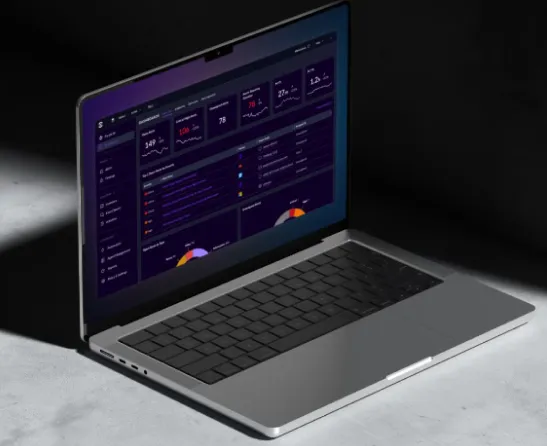
We designed and built Apollo Hospitals Indraprastha's feature-complete digital platform — doctor discovery, condition-led navigation, appointment booking, and patient services — on a Drupal CMS that empowers the clinical team to manage it independently.
Project Overview
Lorem ipsum dolor sit amet consectetur. Malesuada mauris feugiat imperdiet eget. Feugiat eget lectus in nunc fermentum quis dolor magna donec.1
About Project
Apollo Hospitals Indraprastha is one of India's most respected tertiary care institutions — a destination for patients seeking complex surgical interventions, specialist consultations, and internationally benchmarked medical care. The trust patients place in Apollo when selecting a hospital must be earned at every touchpoint — including digital. Eleva8e Digital built a platform that honoured that trust by making world-class healthcare findable, navigable, and accessible to every kind of patient.
67%
Increase in Online Appointment Bookings
54%
Reduction Specialist Discovery Time
89%
Increase in International Patient Enquiries
100%
Drupal CMS Adopted by Clinical Team
11111
Our Role
Healthcare UX requires a category-specific discipline that most digital agencies don't possess. The stakes of a confusing hospital website are not a lost sale — they are a delayed diagnosis or a missed specialist. Eleva8e Digital approached Apollo's platform with the same precision the hospital applies to clinical care.


Design Thinking
Education software fails when built like enterprise tools—dense and jargon-heavy. Language Link applies consumer UX principles: progressive disclosure, contextual help, and role-specific views so staff see what’s needed.
- Role-Specific Dashboard Design
- Education Workflow UX
- Progressive Complexity Architecture


Technology
Four interconnected applications—School Management, HRMS, Lead Management, and websites—needed a unified data architecture to eliminate duplication and enable seamless cross-system reporting across platforms and teams without manual exports.
- Microservices Backend Architecture
- Cross-Application Data Layer
- Real-Time Dashboard Infrastructure
Brand
Language Link’s digital presence, across internal tools and public websites, needed to convey strong educational authority and institutional credibility to prospective students, parents, and partner organisations throughout Vietnam.
- Educational Brand Identity
- Multi-Audience Web Presence Design
- Institutional Digital Standards
Social
Language Link's enrolment pipeline relies on word-of-mouth and social proof. We designed the website to showcase student success stories, teacher credentials, and outcomes, converting trust into measurable conversions.
- Student Testimonial Integration
- Social Proof UX Design
- Community Engagement Pathways
Media
Language Link's marketing team needed campaign management, lead tracking, and enrolment attribution without separate analytics. We integrated reporting into the Lead Management System for seamless, unified performance insights.
- Campaign Attribution Reporting
- Lead Source Analytics
- Marketing ROI Dashboard
The1 Roadblocks1
Lorem ipsum dolor sit amet consectetur. Malesuada mauris feugiat imperdiet eget. Feugiat eget lectus in nunc fermentum quis dolor magna donec.1
Specialist Discovery Failure
With 500+ doctors across 50+ specialties, finding the right specialist was a multi-step exercise in frustration. Patients searching by condition had no clear path to the appropriate specialist, and searching by name required knowing the name in advance.

Content Governance at Scale
Hundreds of doctor profiles, specialty pages, and condition articles had been created without consistent templates or governance — producing wildly inconsistent quality across the site and making systematic updates operationally impossible without developer involvement.

International Patient Experience
Medical tourists evaluating Apollo against international alternatives needed specific information — international liaison contacts, JCI accreditation details, translated content, visa assistance — none of which was surfaced appropriately on the existing platform.
Appointment Friction
Booking an appointment at Apollo required navigating to a contact page, calling a number, and waiting — a patient experience that was three decades behind the digital standard patients now expected and that competitors were beginning to offer.
LOREM IPSUM1
Strategy to Impact Intro
Every page exists for one reason: to move a patient closer to the care they need.
-

User Journey Mapping
We mapped seven distinct patient journeys — domestic specialist seeker, international medical tourist, emergency family member, corporate health programme user, preventive health checker, procedure researcher, and second-opinion seeker — designing information pathways for each that converged at appointment booking.
-
Information Architecture
We built a three-axis navigation system: by specialty, by condition/symptom, and by doctor. Each axis was fully interconnected — selecting a condition surfaced relevant specialists; selecting a specialist surfaced relevant conditions treated and procedures performed. The catalogue finally became searchable and traversable.
-
Wireframing & Prototyping
Doctor profile page prototypes were tested with actual patients in Apollo's waiting areas — measuring comprehension of credentials, trust response to photography treatment, and confidence in the appointment booking trigger. Patient feedback directly shaped the final design.
-

Conversion-Driven UI Design
Appointment booking CTAs were elevated from buried contact forms to context-sensitive triggers on every doctor profile, specialty, and condition page — reducing the distance between 'I found my specialist' and 'I booked an appointment' to a single click.
-
Responsive Experience Optimization
Patients researching complex medical decisions do not restrict themselves to desktop — they move between mobile searches, tablet research, and desktop appointment booking. We ensured the experience was clinically informative and booking-capable on every device.
-
Design System & Component Library
We built standardised Drupal templates for every content type — doctor profiles, specialty pages, condition articles, procedure descriptions — ensuring that every piece of new content published by the clinical team was automatically formatted, complete, and on-brand.
-
Usability Testing & Iteration
We ran usability testing with domestic patients, international medical tourists, and referring physicians — three audiences with completely different needs. Each test produced specific design changes that improved task completion across all three groups before launch.
LOREM IPSUM1
Our Approach
Building a healthcare platform for an institution of Apollo's reputation requires holding the highest possible standard at every stage. We approached the project as if a patient's experience of finding the right care depended on every decision we made — because it does.
Research & Discovery
We began with three weeks of stakeholder immersion — reviewing Apollo's patient communication materials, conducting structured interviews with the patient services team, international liaison officers, and specialist department heads, and analysing the search behaviour of patients finding Apollo organically. We documented the 12 most common patient journeys by entry point and endpoint, mapped the content gaps that prevented each journey from completing successfully, and identified the appointment booking abandonment points that the existing platform created. These findings became the platform's design brief.

Strategy & Experience Planning
We defined a content governance strategy alongside the UX strategy — establishing Drupal content templates, editorial workflows, and clinical review processes that would ensure every piece of content published met Apollo's standards for medical accuracy and patient communication clarity.
UX/UI Design & Prototyping
We designed Apollo's platform with a discipline borrowed from clinical information design — hierarchy that communicates urgency, typography that builds confidence, and a visual language that acknowledged the gravity of healthcare decisions without creating anxiety. Every design prototype was reviewed by both the UX team and Apollo's patient communications leadership.
Development & Optimization
The Drupal CMS was configured with Apollo's exact content governance needs — role-based editorial permissions, mandatory review workflows for new doctor profiles, and automatic SEO metadata generation for every new condition or procedure page published. The appointment booking integration was tested across 12 browser and device combinations before go-live.
Testing & Continuous Improvement
We ran a six-week soft launch with Apollo's most frequently accessed department pages — monitoring search behaviour, appointment booking conversion, and international patient enquiry rates — before extending the new platform across all specialties. Post-launch, monthly analytics reviews with the Apollo digital team track content performance and inform ongoing optimisation.
67%
INCREASE
in Appointment Bookings Online
89%
GROWTH IN
International Patient Enquiries
58%
DOCTOR PROFILE
Engagement Higher
100%
CMS INDEPENDENCE
Achieved at launch
CONCLUSION
Bringing It All Together
Apollo Hospitals Indraprastha's digital platform demonstrates that clinical excellence and digital excellence are not separate domains — they are two expressions of the same institutional commitment to the patient. By designing a platform that served every type of patient at every stage of their healthcare journey, Eleva8e Digital delivered technology that actively contributes to Apollo's mission. In healthcare, the best digital product is one that gets out of the way and connects a patient to the care they need — and that is exactly what this platform does.
Have a Vision?
Let's bring it to life.
Insights, trends, and thought leadership from our team of digital mavens.